News
Long Reads Issue 01: Why does reading matter?
News Story
Hello and welcome to Book Fest Long Reads: a monthly email series where we delve into our archive, bringing you back the words of incredible writers and thinkers who have spoken at the Festival over the years. These 10-15 minute reads are designed to be savoured, so pop the kettle on and settle in. As it's our first edition, we’re kicking things off with a topic that takes us back to the very foundation of things here: the power of reading.
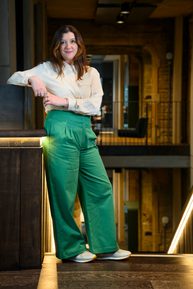
Jenny Niven on the importance of reading
Jenny Niven has been Director of Edinburgh International Book Festival since autumn 2023. A cultural producer and director with an extensive track record leading innovative international and Scottish projects, she shares some thoughts in our inaugural issue.
"The role that reading plays in our lives has been on my mind more than usual lately, especially in light of the eye-watering figures the National Literacy Trust released earlier this month. According to their recent Annual Literacy Survey, children’s reading enjoyment has fallen to its lowest level in almost two decades. Only one in three kids say they enjoy reading in their spare time, and as little as one in five read daily outside of school. These findings are especially devastating as the same report backs up what so many of us intrinsically feel to be true: that reading for pleasure doesn’t just set children up academically for life, it also helps them to relax, to build confidence, to understand the views and culture of others – to feel happy.
Fiction, essays, poems, stories - they give so much more than just comfort or entertainment. They offer thought-expansion and connection, the ability to explore and evaluate the world around us. They can even empower us, with some research suggesting that people with access to books and the opportunity to read are also more likely to vote. We're keen to explore this link between reading and democratic engagement at the Festival, so look out for us leaning more into this space in the future. Reading plays a role in who we are, and can be, within society: it makes us better informed citizens, and increasing the number of people with access to these tools means society becomes more representative and democratic.
I’m a book festival director, so of course I’m going to say that reading matters. But it’s still a joy to see my own experience reflected again and again, and captured much more eloquently, by some of our best loved writers via our incredible Festival archive. Indeed, what the writers in this month’s Long Read (Malorie Blackman, Ada Limón, Jenny Offill) all say in different ways is that reading creates opportunity. Read on to be inspired to make a little more reading space for yourself this winter!"
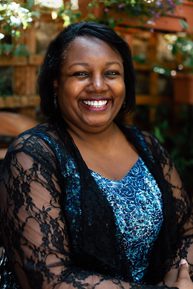
Malorie Blackman on stories as a way into understanding
Transcribed from her 22 August 2023 event
Malorie Blackman (OBE) has written over 70 books for children and young adults, including the Noughts & Crosses series, Thief, and science-fiction thriller, Chasing the Stars. Many of her books have been adapted for stage and screen. Between 2013 and 2015 she was the Children's Laureate.
“I loved reading [as a child], but there was a sense that I wasn’t in any of the books I was reading and that’s the major part of the reason that I wanted to write in the first place … I remember when I wrote Pig Heart Boy, and I wrote that – oh, in the mid-1990’s now, about a boy who has a bad heart and he knows – his family won’t discuss it but he knows he probably won’t see his next birthday unless he gets a heart transplant. And there’s such a shortage of human donors. His dad writes to a doctor and says, ‘Please help,’ and the doctor comes to see them and says, ‘I can help, I can give your son a heart, but it will be from a genetically modified pig.’
And so, I wrote this story, and it’s about how it’s supposed to be a secret and then it all comes out and it changes Cameron’s life, and he loses some friends because of it, and I remember one adult coming up to me, really irate, saying, ‘You shouldn’t be writing that for children, that’s not a children’s book, no child wants to read a story about, you know, a child who’s dying.’
And I said, ‘You know, there are children who are dying – are you saying that they don’t deserve to see their stories? They don’t deserve to see their lives reflected in stories? Are you saying that they should be ignored and excluded?’
And he said, ‘Well, no child wants to read that.’
And I thought, ‘What you mean is you don’t want to read that. And, fair enough. But it’s not for you to say what everyone else should be reading.’
And there are children out there who are ill, and I would hope – well, when I was Children’s Laureate, I got to go to Great Ormond Street Hospital … and I thought, ‘These children, for the most part, are devouring books,’ and they wanted more books that reflected their lives. And also what [reading] does is it provides strategies for their friends, for their family, to discuss the issues that these children may have. And it doesn’t necessarily have to be the same issue, but they can talk about health.
In the same way, I feel that Noughts and Crosses has been used to discuss race. Because if I were to say to any of you, ‘Let’s have a discussion about racism,’ most of you, if not all of you, would run for the hills, you know – which is fair enough.
But if I were to say, ‘let’s have a discussion about this book which happens to feature, among its themes, race and racism, and then we can discuss the characters and what they’re going through’ … it just gives you a safer place to do that. So, then people aren’t instantly thinking, ‘Oh God, this is going to kind of be like walking on eggshells.’ You can then do that within the confines of a story, and that’s what makes them so powerful.
And I think – you know, my dad’s attitude when I was growing up was, ‘Don’t read fiction, because it’s a complete and utter waste of time.’ But I think actually I learnt more about people and human nature from the fiction books I read than I ever did from the nonfiction. Because it taught me about the things we have in common and our differences and our similarities and how to celebrate and embrace both of those aspects of all of us. And you know, we all experience joy and sorrow and so on and I learned that through the books I read.”
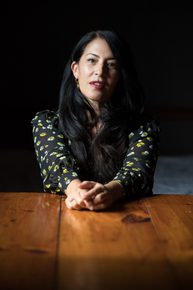
Ada Limón on how poetry creates space
Transcribed from her 23 August 2022 event
Ada Limón is the award-winning author of six books of poetry including The Carrying, Bright Dead Things, and The Hurting Kind, along with two children’s books. She is currently serving as Poet Laureate of The United States (2022-2025).
“I really believe deeply that poetry can help us reclaim our humanity. And I think that we really need that right now. I think that the idea that we have become so numb, and rightly so – I mean, I think compartmentalising and numbness is partly how we survive in a world that feels like we’re moving from one crisis to another without a breath in-between. And I think poetry is a place where we can go to breathe, and also to recognise that we are real human animals that experience a lot of different feelings and that we’re not really supposed to go from, you know, ping ponging from one trauma to the next without a moment of, ‘What just happened?’ ‘Who am I?’ ‘What did we lose?’ ‘Where is my grief?’ ‘Where is my joy?’ And I think poetry makes space for all of that.
I really also believe that paying attention to poetry that’s about nature or about animals can help us repair our relationship with the natural world. You know, I’m not someone who is naïve enough to believe that poetry can stop the climate crisis or heal all of humanity. I wish it could be so. But I do think that it’s a way of recognising who we are right now, and recognising our world right now, and doing it in a way that has that kind of attention, that deep attention that can feel like loving, that can feel like honouring.”
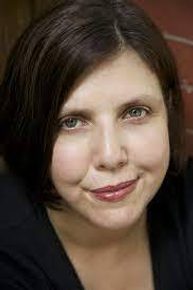
Jenny Offill on how fiction opens us up
Transcribed from her 17 August 2020 event
Jenny Offill is a novelist, author of Women’s Prize-longlisted Weather, as well as Dept. of Speculation (shortlisted for the Folio Prize and the International Dublin Literary Award), and Last Things. She has also written four books for children.
“I had a joke when I was writing Weather that I would go out of my little study and I would say to my husband, ‘Well I’m so glad I solved climate change by writing my weird experimental novel,’ you know – because it felt very absurd as an act.
But I do think that – I really think that the arts and the humanities have a part to play in sort of allowing us to feel or dream our way into situations that we’re not in yet. To sort of think through possibilities. To imagine what kind of world it is we want to be in. And also just to keep us from shutting down.
I think it’s so traumatic right now to be in the world that the temptation is to shut down completely, to just numb yourself out with hours and hours of Netflix (which, believe me, I’ve done plenty of). But I think that a good novel, a good film, good music – it has more of a quality of opening you up and allowing you to feel, actually, a sense of freedom.
In my ‘Tips for Trying Times’, one of the things I thought was very beautiful was people who lived through the siege of Leningrad were talking about how they read Tolstoy – everybody was reading Tolstoy – and they said that they did it because it helped them know how to feel, it helped them know how to have a proper attitude toward the vicissitudes of what they were going through, in the same way people were playing music on the streets of Sarajevo during wartime. This was a way for people to, in the midst of just the darkest possible situation, have a moment of touching something sublime or feeling something sublime. And so, I think the best arts do that for you.”