A Scottish Sensory Storytelling Adventure by Mike Nicholson
- Learning level
- Early
- Genre
- Fiction
- Curriculum area
- Literacy & English, Health & Wellbeing
- Year published
- 2025
Accessibility + SEND
- Sensory event
- Learning disability friendly
Overview
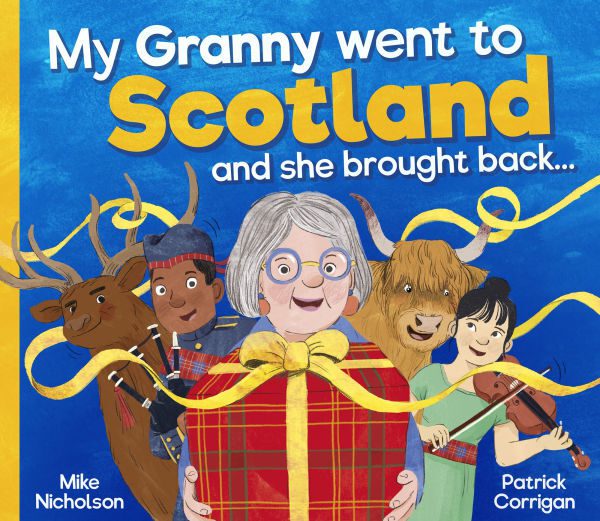
We’ve worked with Sensory Storyteller and Founder of My Kind of Book, Ailie Finlay, to create this resource to accompany Mike Nicholson’s humorous book, My Granny Went to Scotland.
This lively picture book by Mike Nicholson and Patrick Corrigan is perfect to turn into a sensory story. It includes lots of lovely repetition and each double page spread is easy to link to one sensory prop. It lends itself to quite a rambunctious telling so be prepared to throw yourself into it and ‘gie it laldy’!
Note to teachers: We recommend reading the book(s) carefully before using it in the classroom or recommending it to pupils, using your best judgement to determine whether the topics covered are appropriate for your class.
Outcomes and impacts
The content and activities in this learning resource are designed to support learning outcomes in relation to the curriculum as well as the UNCRC articles.
Curriculum of Excellence:
- Health and Wellbeing: In everyday activity and play, I explore and make choices to develop my learning and interests. I am encouraged to use and share my experiences.HWB 0-19a
- Literacy (Listening and Talking: Understanding, analysing and evaluating) - To help me understand stories and other texts, I ask questions and link what I am learning with what I already know. LIT 0-07a / LIT 0-16a / ENG 0-17a
- Literacy (Listening and Talking: Creating Texts) - I enjoy exploring events and characters in stories and other texts and I use what I learn to invent my own, sharing these with others in imaginative ways. LIT 0-09b / LIT 0-31a
UN Convention on the Rights of the Child (UNCRC):
- Article 13 (freedom of expression) Every child must be free to express their thoughts and opinions and to access all kinds of information, as long as it is within the law.
- Article 14 (freedom of thought, belief and religion) Every child has the right to think and believe what they choose and also to practise their religion, as long as they are not stopping other people from enjoying their rights. Governments must respect the rights and responsibilities of parents to guide their child as they grow up.
- Article 29 (goals of education) Education must develop every child’s personality, talents and abilities to the full. It must encourage the child’s respect for human rights, as well as respect for their parents, their own and other cultures, and the environment.
- Article 31 (leisure, play and culture) Every child has the right to relax, play and take part in a wide range of cultural and artistic activities