What Do YOU Think? By Matthew Syed and Kathy Weeks
- Learning level
- First, Second
- Genre
- Non-fiction
- Curriculum area
- Health & Wellbeing, Social Studies
- Year published
- 2023
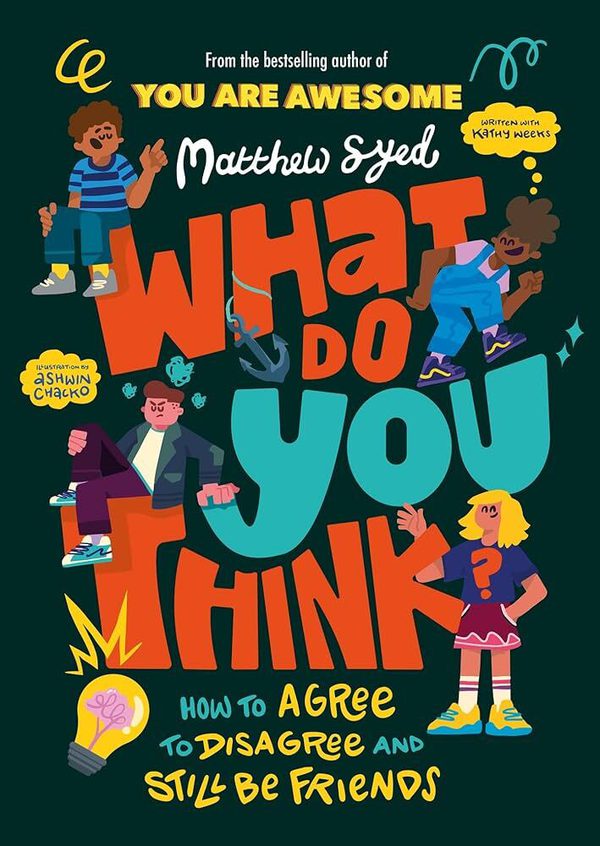
A brilliant roadmap to debating our views with empathy, What Do YOU Think? is a hugely engaging, funny and practicable introduction to the art of constructive conversation from the bestselling author of You Are Awesome and Dare To Be You. follow this book and therefore the resource.
Note to teachers: We recommend reading the book carefully before using it in the classroom or recommending it to pupils, using your best judgement to determine whether the topics covered are appropriate for your class.
Outcomes and impacts
The content and activities in this learning resource are designed to support learning outcomes in relation to the curriculum as well as the UNCRC articles
Curriculum of Excellence:
- Health and Wellbeing (Mental, emotional, social and physical wellbeing - social wellbeing) - As I explore the rights to which I and others are entitled, I am able to exercise these rights appropriately and accept the responsibilities that go with them. I show respect for the rights of others. HWB 0-09a / HWB 1-09a / HWB 2-09a
- Health and Wellbeing (Mental and emotional wellbeing) - I understand that people can feel alone and can be misunderstood and left out by others. I am learning how to give appropriate support. HWB 0-08a / HWB 1-08a / HWB 2-08a
- Health and Wellbeing (Mental and emotional wellbeing) - I know that friendship, caring, sharing, fairness, equality and love are important in building positive relationships. As I develop and value relationships, I care and show respect for myself and others. HWB 0-05a / HWB 1-05a / HWB 2-05a
- Social Studies (People, past events and societies) - I can compare and contrast a society in the past with my own and contribute to a discussion of the similarities and differences. SOC 2-04a
- Social Studies (People in society, economy and business) - I can use evidence selectively to research current social, political or economic issues. SOC 2-15a
UN Convention on the Rights of the Child (UNCRC):
- Article 13 (freedom of expression) Every child must be free to express their thoughts and opinions and to access all kinds of information, as long as it is within the law.
- Article 14 (freedom of thought, belief and religion) Every child has the right to think and believe what they choose and also to practise their religion, as long as they are not stopping other people from enjoying their rights. Governments must respect the rights and responsibilities of parents to guide their child as they grow up.
- Article 17 (access to information from the media) Every child has the right to reliable information from a variety of sources, and governments should encourage the media to provide information that children can understand. Governments must help protect children from materials that could harm them.
- Article 29 (goals of education) Education must develop every child’s personality, talents and abilities to the full. It must encourage the child’s respect for human rights, as well as respect for their parents, their own and other cultures, and the environment.
- Article 31 (leisure, play and culture) Every child has the right to relax, play and take part in a wide range of cultural and artistic activities