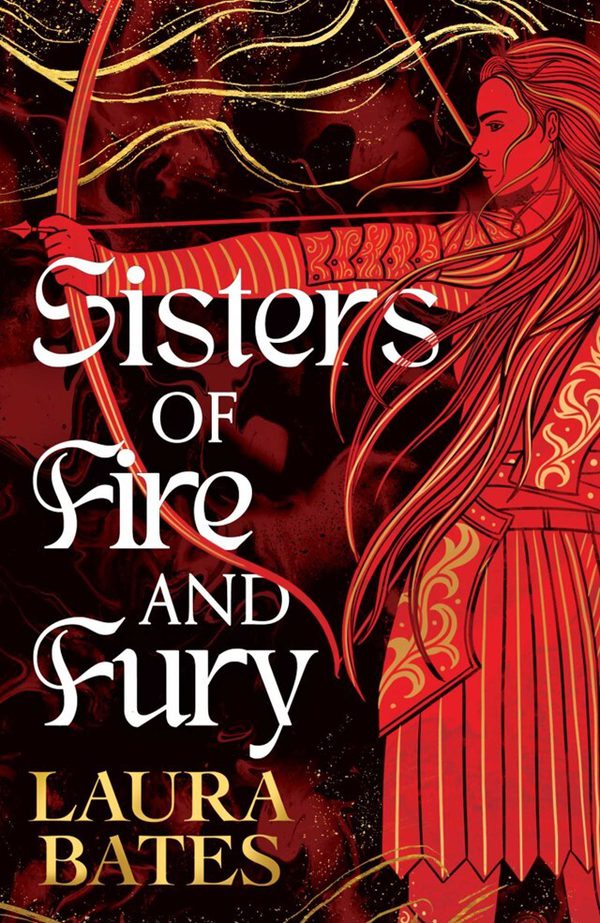
Women are Legends Too: Reimagining Fantasy with ‘Sisters of the Sword and Shadow’ and ‘Sisters of Fire and Fury’ by Laura Bates
- Learning level
- Fourth
- Genre
- Fiction
- Curriculum area
- Social Studies, Literacy & English, Expressive Arts
- Year published
- 2025
Overview
Explore themes of love, grief and fury with this learning resource which focuses on the first book in the duology, Sisters of the Sword and Shadow. Discuss how this book can be seen as a feminist retelling and, for those who have read both books, consider the questions related to Sisters of Fire and Fury at the end of this resource.
Note to teachers: We recommend reading the book carefully before using it in the classroom or recommending it to pupils, using your best judgement to determine whether the topics covered are appropriate for your class.
Outcomes and impacts
The content and activities in this learning resource are designed to support learning outcomes in relation to the curriculum as well as the UNCRC articles
Curriculum of Excellence:
- Literacy (Reading – Understanding, analysing and evaluating) To show my understanding across different areas of learning, I can: clearly state the purpose, main concerns, concepts or arguments and use supporting detail, make inferences from key statements and state these accurately in my own words, compare and contrast different types of text. LIT 4-16a
- Literacy (Writing – Tools for writing) I can justify my choice and use of layout and presentation in terms of the intended impact on my reader. LIT 4-24a
- Social Studies (People, past events and societies) By studying groups in past societies who experienced inequality, I can explain the reasons for the inequality and evaluate how groups or individuals addressed it. SOC 4-04a
- Social Studies (People, past events and societies) I have investigated a meeting of cultures in the past and can analyse the impact on the societies involved. SOC 4-05c
- Expressive Arts (Art and Design) I can analyse art and design techniques, processes and concepts, make informed judgements and express considered opinions on my own and others’ work. EXA 4-07a
UN Convention on the Rights of the Child (UNCRC):
- Article 13 (freedom of expression) Every child must be free to express their thoughts and opinions and to access all kinds of information, as long as it is within the law.
- Article 14 (freedom of thought, belief and religion) Every child has the right to think and believe what they choose and also to practise their religion, as long as they are not stopping other people from enjoying their rights. Governments must respect the rights and responsibilities of parents to guide their child as they grow up.
- Article 29 (goals of education) Education must develop every child’s personality, talents and abilities to the full. It must encourage the child’s respect for human rights, as well as respect for their parents, their own and other cultures, and the environment.
- Article 31 (leisure, play and culture) Every child has the right to relax, play and take part in a wide range of cultural and artistic activities.