Writing Yourself with ‘You Are a Story’ by Laura Dockrill
- Learning level
- Fourth, Third, Senior
- Genre
- Non-fiction
- Curriculum area
- Literacy & English, Health & Wellbeing
- Year published
- 2023
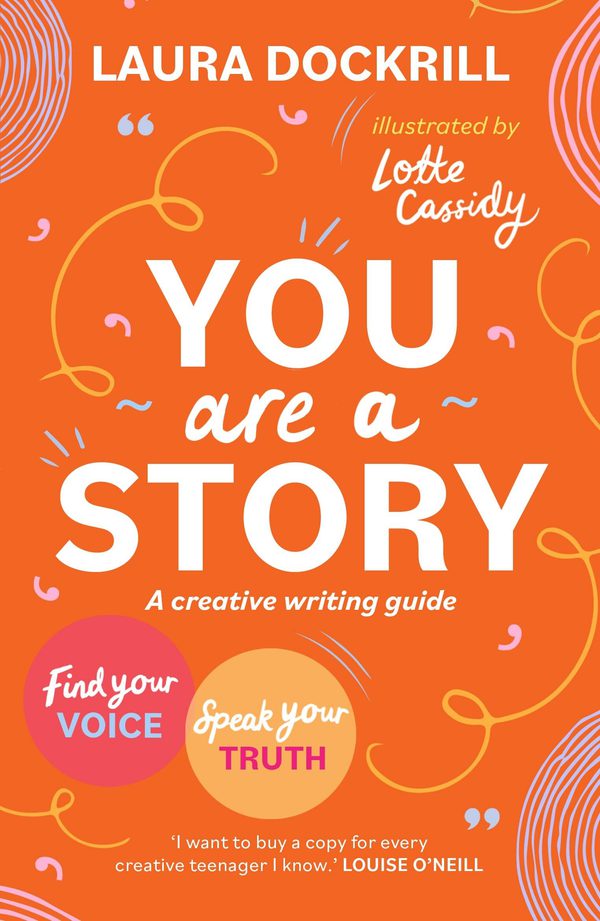
Explore creativity, mental wellbeing and the joy of writing for yourself with this learning resource which will inspire and encourage your pupils to get writing!
Note to teachers: We recommend reading the book carefully before using it in the classroom or recommending it to pupils, using your best judgement to determine whether the topics covered are appropriate for your class.
Outcomes and impacts
The content and activities in this learning resource are designed to support learning outcomes in relation to the curriculum as well as the UNCRC articles
Curriculum of Excellence:
- Literacy and English (Writing - Creating texts) - I can engage and/or influence readers through my use of language, style and tone as appropriate to genre. ENG 3-27a / ENG 4-27a
- Literacy and English (Writing - Creating texts) - I can create a convincing impression of my personal experience and reflect on my response to the changing circumstances to engage my reader. ENG 4-30a
- Literacy and English (Writing - Organising and using information) - I can use notes and other types of writing to generate and develop ideas, retain and recall information, explore problems, make decisions, generate and develop ideas or create original text. I recognise when it is appropriate to quote from sources and when I should put points into my own words. I can acknowledge my sources appropriately. LIT 3-25a
- Health and Wellbeing (Mental, emotional, social and physical wellbeing - Mental wellbeing) - I know that we all experience a variety of thoughts and emotions that affect how we feel and behave and I am learning ways of managing them. HWB 3-02a / HWB 4-02a
- Health and Wellbeing (Mental, emotional, social and physical wellbeing) - I understand that there are people I can talk to and that there are a number of ways in which I can gain access to practical and emotional support to help me and others in a range of circumstances. HWB 3-03a / HWB 4-03a
UN Convention on the Rights of the Child (UNCRC):
- Article 13 (freedom of expression) Every child must be free to express their thoughts and opinions and to access all kinds of information, as long as it is within the law.
- Article 14 (freedom of thought, belief and religion) Every child has the right to think and believe what they choose and also to practise their religion, as long as they are not stopping other people from enjoying their rights. Governments must respect the rights and responsibilities of parents to guide their child as they grow up.
- Article 29 (goals of education) Education must develop every child’s personality, talents and abilities to the full. It must encourage the child’s respect for human rights, as well as respect for their parents, their own and other cultures, and the environment.
- Article 31 (leisure, play and culture) Every child has the right to relax, play and take part in a wide range of cultural and artistic activities